Packaging: The responsibility of online retailers and the fashion industry
Anyone who likes to buy fashion online knows: the clothes arrive in an oversized cardboard box – thickly padded, with an extra plastic wrapping for each piece. These practices are commonplace, but they generate huge amounts of waste each year. According to a market analysis by DS Smith, online fashion alone accounts for more than 2 million plastic shipping bags per day! But it doesn’t have to be this way. At CALIDA, we have been looking at our packaging and shipping processes for many years. That’s why we want to show you why well-designed packaging solutions are so important, what alternatives are available and what you as a customer can do to make more conscious choices when shopping online.
by CALIDA
June 25, 2025•4 min reading time
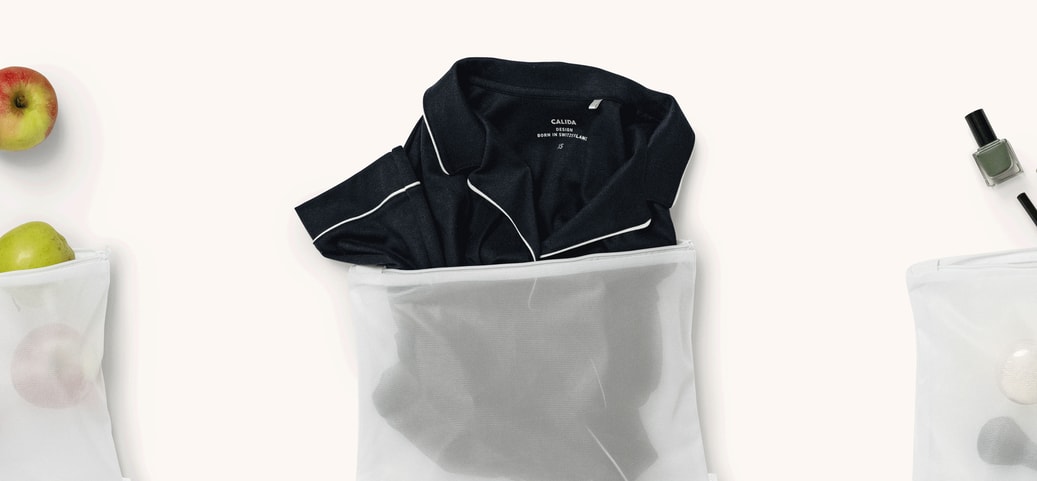
Packaging made from 100% recycled PET – reusable and versatile.
Table of Contents
The biggest environmental issues caused by online fashion shops
• Almost 800 million plastic mailing bags per year
• Unnecessary filling material, adhesive tape & more end up in the wrong waste stream
• Long distances, express shipping & returns mean additional transport
Packaging & products: How you can help save resources
• What shipping packaging made from different materials can offer
• Buy better, buy less – and make more conscious choices
A few important points
Around 2 million plastic packages are shipped in the online fashion sector every day – that adds up to around 800 million mailing bags per year!
Reusable shipping packaging without additional plastic can protect clothing reliably during shipping.
Fewer returns and conscious shopping habits can also help save resources.
The biggest environmental issues caused by online fashion shops
We all know them: images of turtles choking on straws, footage of piles of waste washed up on tropical beaches and alarming facts about invisible microplastics that can affect our environment and health. And the most concerning part: Online retail contributes to these issues – particularly in the fast-fashion sector.
Almost 800 million plastic mailing bags per year
Many online shops package their products in plastic – for cost reasons or simply out of habit. Yet this can become a major issue, as plastic often ends up in the wrong waste streams or, in the worst case, directly in the environment – where it can pollute rivers, oceans and entire ecosystems.
But what does this have to do with CALIDA? Around 791 million plastic mailing bags are shipped in the fashion e-commerce sector every year! At CALIDA, we want to set an example within the fashion industry and therefore use shipping materials that are suitable for recycling.
Unnecessary filling material, adhesive tape & more end up in the wrong waste stream
It is not just the packaging itself that can be problematic, but also the materials used around it. Cardboard boxes are often filled with unnecessary padding – which can be made of plastic in the worst case. Parcel tape and stickers can also make recycling cardboard more difficult; ultimately, these materials may end up in general waste instead of being correctly separated.
If you want to help ensure packaging materials are recycled, pay attention to waste separation and choose brands like CALIDA that consider materials and solutions designed with recycling in mind – without plastic straps & Co.
Long distances, express shipping & returns mean additional transport
Using express delivery or ordering several garments to choose from, only to keep one, can result in additional transport journeys. Especially when garments have previously been produced in Asia and imported to Germany, this can involve further emissions. After all, every transport journey and return can be associated with CO₂ emissions – even when the packaging is made from other materials.
Packaging & products: How you can help save resources
If you want to continue shopping for clothing online, there are several things you can do to reduce your use of resources. This includes not only choosing your clothes carefully, but also being mindful of shipping. At CALIDA, we combine underwear made from selected materials with reusable packaging solutions.
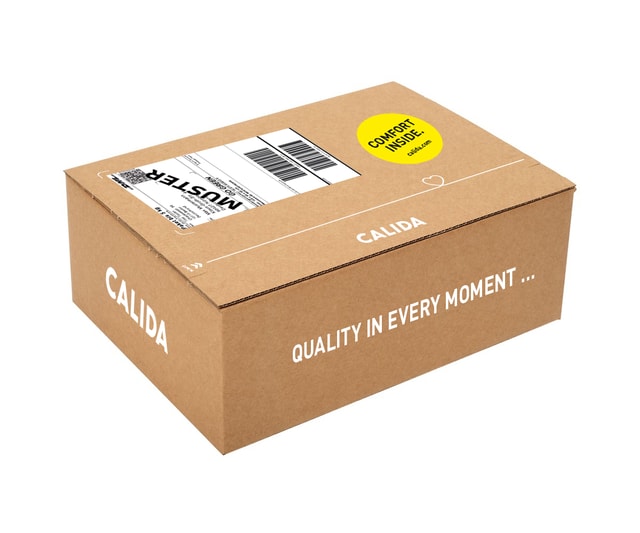
What shipping packaging made from different materials can offer
Recyclable cardboard boxes, paper packing tape and hemp, wood wool or cellulose for padding: The range of shipping materials available today is almost endless – so it is worth asking why so many online shops still rely on plastic. And there is no need to worry: shipping packaging made from different materials can reliably protect products from dirt and moisture and, depending on the material, can subsequently be reused or recycled.
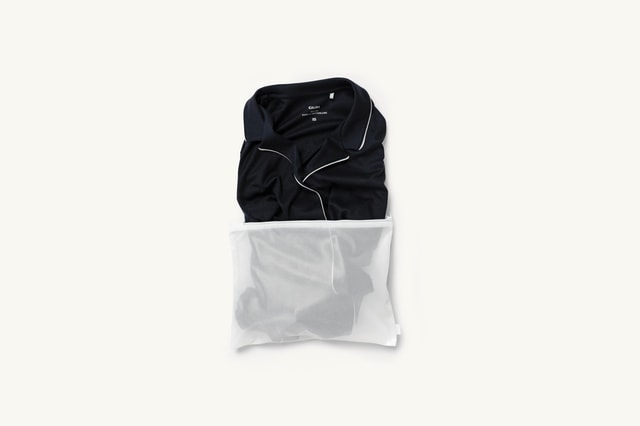
For example, discover our deliveries in the practical CALIDA laundry bag, which you can then use when washing your clothes or for storing laundry, cosmetics or even food!
Buy better, buy less – and make more conscious choices
Conscious consumption does not start with packaging, but also with the products you choose – something worth remembering. Choosing well-made clothing can help you use garments for longer and reduce unnecessary returns and new purchases.
CALIDA offers an alternative to the fast-fashion sector: Fashion made from TENCEL™ Modal and other selected materials combines careful workmanship with distinctive comfort – packaged in mailing bags, boxes and bags designed for different purposes. In short: The best of both worlds!
Buy & sell second-hand – online too!
We understand that you may not like buying underwear & Co. second-hand. Instead, CALIDA offers a wide range of underwear as an alternative to buying second-hand.
Nevertheless, we clearly support buying and selling pre-owned fashion – because this allows existing garments to be used for longer and can help avoid additional production and transport journeys for new goods. And the best part: You can also reuse your old packaging, rather than buying new packaging or having to worry about separating your waste.
Conclusion: Reduce. Reuse. Recycle.
The choice of packaging is not a marketing trend. Today, it is an important responsibility – or at least it should be, and that is also the approach we take at CALIDA.
But what does taking responsibility actually mean? For example, companies can select packaging materials with their recyclability in mind and produce in Europe – while consumers can shop more consciously, avoid unnecessary returns and reuse or recycle packaging.
Whether it is a versatile laundry bag or a recyclable cardboard box, every small decision can help use resources more consciously and give packaging a useful second life.