Night sweats: Causes, tips & when to see a doctor
You wake up drenched in sweat even though your bedroom is cool. Many people experience this — yet few realise that, besides stress, infections and hormonal changes, your choice of sleepwear plays a key role in regulating body temperature. Here’s why synthetic fibres can increase perspiration, which materials are better suited for sensitive nights and what really helps against night sweats. You’ll also learn about the most common causes, what you can do yourself and when it’s time to seek medical advice.
by CALIDA
April 29, 2026•8 min reading time
Night sweats are often caused by hormonal changes and can disrupt restful sleep.
Table of Contents
What are night sweats and when are they unusual?
From stress to diet: The most common causes of night sweats
• Hormonal causes: Menopause, cycle & more
• Mental triggers: Stress, anxiety & emotional strain
• Medical causes: Infections, hyperthyroidism & more
• Unhealthy habits: Alcohol, caffeine & diet
• Sleep environment: Temperature, bedding & sleepwear
Severe night sweats in women: What’s often behind it
Severe night sweats in men: What you should know
What helps against night sweats? The 3 best tips
• Tip 1: Create the right sleep environment
• Tip 2: Choose the right sleepwear
• Tip 3: Evening routine & relaxation
When are night sweats dangerous and when should you see a doctor?
The key points
The most common causes of night sweats include stress, infections, an overactive thyroid, alcohol consumption and hormonal fluctuations — especially during menopause.
Unsuitable sleepwear is another frequent trigger. Breathable pyjamas, a cool sleep environment and a calming evening routine can noticeably reduce nighttime sweating.
If you regularly sweat heavily at night or notice additional symptoms such as weight loss, fever or swollen lymph nodes, you should seek medical advice.
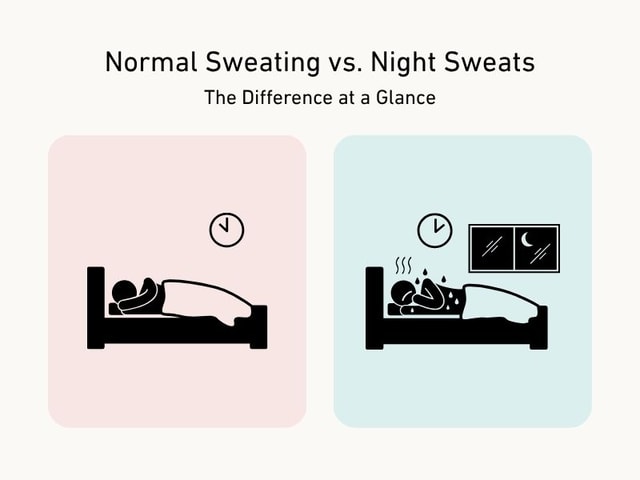
Normal sweating vs. night sweats – the key differences at a glance
What are night sweats and when are they unusual?
Occasional sweating at night is usually nothing to worry about. Nighttime perspiration is a natural process in which the body regulates its temperature and releases moisture through the skin — just as it does during the day. This mechanism is physiological and, on its own, completely harmless.
The term night sweats is used when sweating becomes so intense that sleepwear or bedding becomes soaked and needs to be changed — and this happens without obvious external causes such as a warm room or a heavy blanket that doesn’t match the season. These episodes can occur irregularly or in clusters. During a cold or mild infection, night sweats often appear only once or over a short period.
In cases of temporary infections or external factors like hot summer nights, sweating at night is generally harmless. However, if night sweats persist for several weeks or are accompanied by additional symptoms, it’s important to look into the underlying causes so you can finally sleep better again.
From stress to diet: The most common causes of night sweats
Night sweats can have many different triggers — from easily adjustable habits to hormonal changes and medical conditions. Below you’ll find the most common reasons why intense nighttime sweating occurs.
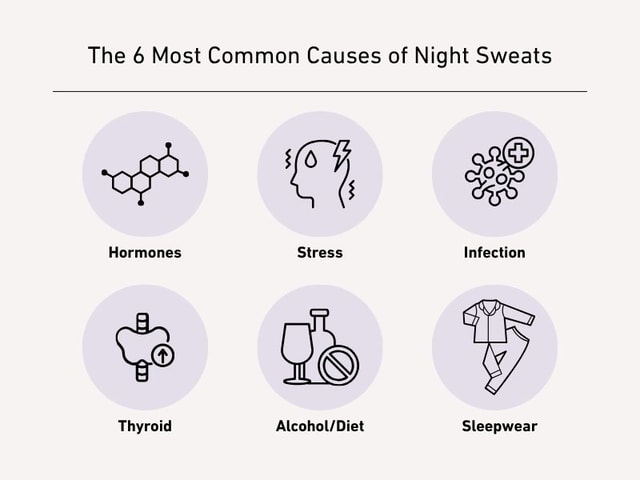
The six most common causes of night sweats – from hormones to sleepwear
Hormonal causes: Menopause, cycle & more
For many women, hormonal fluctuations are by far the most common trigger of intense night sweats. Nighttime sweating is one of the typical sleep disturbances during menopause — an estimated 60 to 80% of women experience it during this phase.
The reason lies in falling oestrogen levels, which disrupt the body’s temperature regulation. The result is sudden, often very intense hot flashes during the night.
But younger women can experience this too: some notice increased sweating around ovulation or menstruation, while others develop symptoms during pregnancy due to hormonal shifts.
Mental triggers: Stress, anxiety & emotional strain
Stress and inner tension are often underestimated as causes of night sweats. When the mind cannot unwind in the evening, the nervous system remains in a state of alert. The body may release stress hormones such as adrenaline and cortisol, which influence temperature regulation and can intensify sweating.
Irregular sleep schedules can reinforce this cycle by disrupting the natural circadian rhythm and creating subtle internal tension. Improving sleep hygiene — with a consistent bedtime and calming evening rituals — helps reduce stress and shift focus away from worries that keep the mind active.
Medical causes: Infections, hyperthyroidism & more
In addition to hormonal and psychological factors, medical conditions can also trigger night sweats. Colds and other infections are common causes — especially when accompanied by fever. In these cases, sweating is often part of the healing process as the immune system fights pathogens.
Chronic conditions such as high blood pressure, diabetes mellitus or hyperthyroidism should also be considered. An overactive thyroid accelerates metabolism, which can raise body temperature and lead to sweating.
Certain medications — including some antidepressants or neuroleptics — as well as rarer illnesses may also contribute. If you suspect that your medication is causing symptoms or that an underlying condition may be involved, medical evaluation is important.
Unhealthy habits: Alcohol, caffeine & diet
What you eat and drink in the evening directly affects your sleep quality and your tendency to sweat at night. Alcohol, for example, dilates blood vessels and temporarily raises body temperature, causing many people to sweat more. The same applies to very spicy foods or caffeinated drinks shortly before bedtime.
Heavy, fatty meals can also stimulate digestion and increase heat production. To reduce night sweats, opt for lighter evening meals with lean proteins and high‑quality carbohydrates.
Sleep environment: Temperature, bedding & sleepwear
A warm bedroom or a heavy duvet can easily lead to overheating at night. The ideal sleep temperature is 16–18°C. But one factor is often overlooked: your sleepwear.
Many pyjamas are made from synthetic fibres that trap heat and prevent moisture from evaporating. As a result, sweat accumulates and the body cannot regulate its temperature effectively.
Breathable fabrics such as TENCEL™ or cotton absorb moisture and release it outward, keeping your skin dry and comfortable throughout the night.
CALIDA’s DEEPSLEEPWEAR line is designed specifically for people who tend to overheat or sweat at night. The Balancing and Cooling styles use breathable materials that support the body’s natural temperature regulation. Discover the perfect sleepwear to help reduce night sweats and improve your rest.
Severe night sweats in women: What’s often behind it
Many women begin to notice typical menopausal changes between the ages of 40 and 50 — from weight gain to changes in the skin. Intense night sweats are another common and often distressing symptom during this time.
The reason: Shortly before and during menopause, oestrogen levels drop, making the brain’s temperature‑regulating centre more sensitive. Even small fluctuations can trigger strong hot flashes and sudden sweating. Many women experience these symptoms most intensely at night, just when the body is meant to rest.
Frequent awakenings can significantly disrupt overall sleep quality, leading to daytime fatigue and difficulty concentrating. Typical mood swings during menopause may also intensify. Many women report waking up several times a night, needing to change their sleepwear — and struggling to fall back asleep afterwards.
A cool sleep environment, a calming evening routine and the right sleepwear can make a noticeable difference. Cooling pyjamas made from moisture‑regulating fibres help keep the skin dry and comfortably balanced — even during intense phases of sweating.
Severe night sweats in men: What you should know
Although it’s talked about less often, strong night sweats are also common in men. While hot flashes in women are frequently linked to hormonal changes, men usually experience different triggers. Typical causes include chronic stress, evening alcohol consumption and excess weight, which makes temperature regulation more difficult.
Men can also experience medical causes such as hyperthyroidism or sleep apnoea. In sleep apnoea, increased sweating and breathing interruptions often occur — a combination that can be dangerous and should always be medically assessed. Hormonal factors play a role in men as well: a declining testosterone level with age can have effects similar to falling oestrogen levels in women.
The same applies here: If you regularly wake up drenched in sweat, start by examining your sleep environment and lifestyle. If symptoms persist or additional issues arise, seeking medical advice is important.
What helps against night sweats? The 3 best tips
If you want to reduce night sweats, the first step is understanding the underlying cause. Once you know what triggers your symptoms, you can counteract them with simple, targeted measures. But what truly helps against sweating at night? Here are the three most effective tips.
Tip 1: Create the right sleep environment
If you want to get through the night without sweating, room temperature is key. It shouldn’t be too warm or too cold — sleeping in a hot environment not only leads to damp sheets but also reduces your body’s ability to recover.
The ideal bedroom temperature is 16–18°C. This may feel cool at first, but it helps your body naturally lower its temperature during sleep. Fresh air also supports this process, so airing out the room before bedtime is beneficial. Depending on the season, switching to a lighter duvet can also help regulate temperature and reduce sweating.
Tip 2: Choose the right sleepwear
The fabric that lies directly against your skin at night has a major impact on how much you sweat. The key difference lies in natural vs. synthetic fibres. Synthetic materials like polyester trap heat and hinder moisture regulation.
Fibres such as TENCEL™ or high‑quality cotton, on the other hand, absorb moisture, release it outward and help maintain a balanced body climate. CALIDA’s DEEPSLEEPWEAR Balancing and Cooling lines are designed specifically for people who tend to overheat or sweat at night. These carefully selected materials support the skin’s natural breathability and help keep your body temperature stable — even on warm nights.
Tip 3: Evening routine & relaxation
A calming evening routine is one of the most effective ways to reduce night sweats. In addition to avoiding habits like alcohol, heavy meals or caffeinated drinks late in the evening, there are several things you can actively do to soothe your nervous system and reduce stress.
A healthy evening routine might include breathing exercises, gentle stretching or a short meditation. A warm bath with relaxing oils can also help loosen muscles and support your body’s natural temperature regulation.
Consistent bedtimes are another powerful tool for improving sleep quality. A steady rhythm teaches your body when it’s time to wind down, helping you fall asleep more gently and restfully.
When are night sweats dangerous and when should you see a doctor?
Occasional sweating at night is harmless in most cases. However, there are warning signs that make a timely medical check‑up important:
You have fever, persistent fatigue or notice swollen lymph nodes.
You experience intense night sweats for several weeks without a clear cause.
Night sweats occur together with unintentional weight loss.
You feel that stress or lifestyle alone cannot explain your symptoms.
A healthcare professional can rule out medical causes such as hyperthyroidism, metabolic disorders or other underlying conditions through targeted examinations. Don’t hesitate to seek professional support — it brings clarity and peace of mind.
Conclusion
The causes of night sweats are diverse. Often, nighttime sweating is a harmless reaction to stress or a long day. Sometimes, however, hormonal changes or medical conditions — from acute infections to chronic illnesses — are involved. For women, menopause is a common trigger; for men, stress and lifestyle factors often play a larger role.
One factor that is frequently overlooked is sleepwear. Yet it has a measurable impact on nighttime sweating. Choosing breathable fibres helps regulate temperature more effectively and supports deeper, calmer sleep. CALIDA’s DEEPSLEEPWEAR Balancing and Cooling collections were designed precisely for this purpose.
With the right combination of a well‑adjusted sleep environment, a calming evening routine, healthy habits and suitable sleepwear, night sweats can often be significantly reduced. If symptoms persist despite these measures, a medical evaluation is the right next step.