Forgot laundry in the washing machine: And now?
You open the washing machine – and realise that your laundry has been sitting there for far too long. Maybe for a few hours, perhaps even overnight. The good news: In many cases, the laundry can still be saved. What matters is not just the amount of time, but also the smell, temperature and condition of the machine. Here you will find out step by step what you should do now, when another wash cycle is necessary – and how to avoid it in the future.
by CALIDA
January 7, 2026•4 min reading time
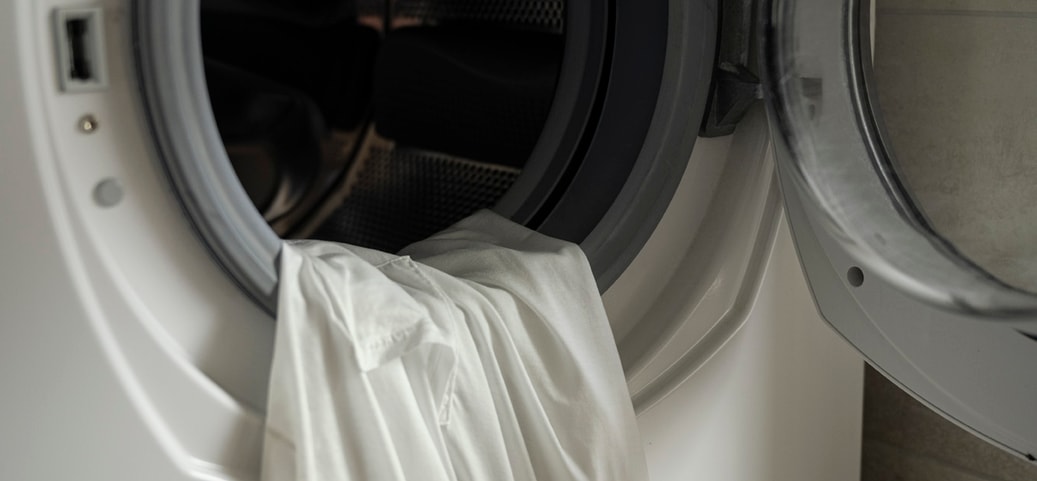
Forgot your laundry? Don't worry! Find useful tips here.
Table of Contents
How long can laundry stay in the washing machine?
The most important step: the smell test
• Laundry smells neutral or fresh
• Laundry smells slightly musty
• Laundry smells noticeably musty
Washing your laundry again – how to get rid of the smell
If the smell keeps coming back: check your washing machine
Can I simply dry musty laundry?
How to avoid forgetting your laundry in the future
How long can laundry stay in the washing machine?
There is no universal time limit. The amount of time alone is not the only factor, as several aspects play a role:
the temperature at which the laundry was washed
how clean the washing machine is
how warm the room is
which material was washed
General guidance:
Up to approx. 2 hours: usually no problem
6–12 hours: often still fine, check the smell
Overnight or longer: a smell test is recommended
Rule of thumb: The warmer and more humid the surroundings, the faster odour-causing bacteria can multiply.
The most important step: the smell test
Before doing anything else, smell the laundry. The result determines what you should do next.
Laundry smells neutral or fresh
The laundry can be hung up or dried directly
Shake it out well and dry it in a well-ventilated place if possible
Laundry smells slightly musty
Another wash cycle is recommended
A short programme at a higher temperature may often be sufficient
Laundry smells noticeably musty
The laundry needs to be washed again
Otherwise, the smell may remain even after drying
Washing your laundry again – how to get rid of the smell
If a second wash cycle is necessary, keep the following in mind:
The right temperature
60 °C or higher, provided the material allows it
Cotton and robust textiles are usually suitable
For delicate laundry, use 40 °C + a hygiene rinse additive
Detergent & additives
Use normal detergent according to the recommended dosage
Optional: hygiene detergent
Home remedies such as vinegar should be used with caution and are not suitable for every washing machine or textile
Important when washing high-quality garments: check the care label to help preserve the fibres and fit.
If the smell keeps coming back: check your washing machine
Musty laundry is often not a laundry problem, but a machine problem.
This can help:
Run an empty wash cycle at 90 °C
Thoroughly clean the rubber seal
Rinse out the detergent drawer
Leave the door and drawer open after each wash
This can help reduce residue and unwanted odours inside the machine.
Can I simply dry musty laundry?
No – this is not a good idea.
If musty laundry is dried without washing it again, the smell can remain in the fabric and may be difficult to remove later.
How to avoid forgetting your laundry in the future
A few simple habits can help:
Activate the washing machine's end-of-cycle signal
Set a timer on your phone when starting the machine
Avoid washing laundry late in the evening
Shake out the laundry briefly after the programme ends
Clean the machine regularly
Quick checklist: Forgot your laundry – what now?
Check the smell
neutral → dry
musty → wash again
use a higher temperature where possible
clean the machine if necessary
set up a routine to prevent it happening again
Conclusion
Forgotten laundry is not a disaster – as long as you respond appropriately.
The smell test is the most important decision point, followed by material-appropriate care and a clean washing machine. This can help you keep your textiles fresh and care for them according to their care instructions.